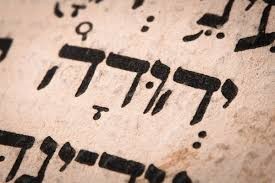
Translator, scholar, and son of the world his Yiddish Tanakh would one day serve.
Translator, scholar, and son of the world his Yiddish Tanakh would one day serve.
A Man Formed by the World He Would Serve
Mordechai Samuel Bergmann was not a translator who came to Yiddish from the outside. He was formed within the world his translation would one day serve. Raised in the Orthodox communities of Tsarist Poland, trained in the cheder (traditional elementary school) and besmedresh (house of study), and steeped in the cadences of rabbinic discourse, Bergmann understood Yiddish not as a subject of study but as a Jew, as the medium of thought itself, his thought as a Jew. As a careful comparison shows, another Yiddish translator named Yehoash (Solomon Bloomgarden) clearly has Bergmann in front of him, though there is sometimes an obscuring of the otherwise clear messianic substance of the Hebrew as in the case of Isaiah 8:23/9:1 where Yehoash summarily omits the word "Galilee" which thankfully is not lost in Bergmann's Yiddish rendering.
This insider knowledge is precisely what makes his translation extraordinary. The Yiddish Tanakh does not read like a translation. It reads like a text that belongs in the language — idiomatic, alive, and unmistakably Jewish.
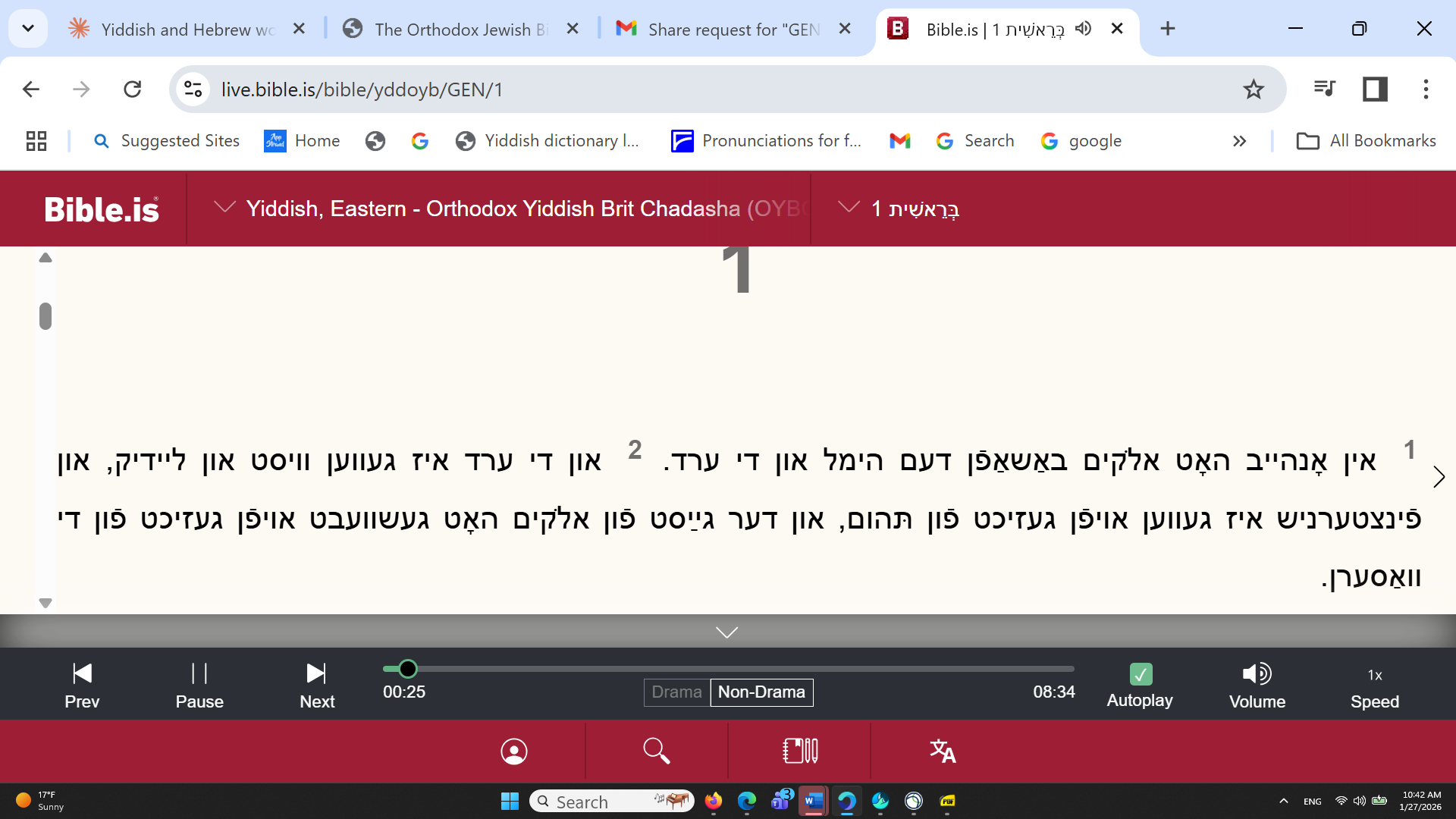
A monumental 1,659-page octavo edition — that complete updated Yiddish Tanakh now on FAITH COMES BY HEARING. Its appearance marked a watershed moment in the history of Jewish Scripture.
The 1898 Edition: A Watershed Moment
In 1898, Bergmann published what no one could quite believe: a complete Yiddish Tanakh. All twenty-four books of the Hebrew Bible — Torah, Nevi'im, Ketuvim — rendered into the living language of Ashkenazi Jewish life. The edition ran to 1,659 pages in the octavo format, a physical monument to an extraordinary scholarly undertaking.
His 1912 revision brought the work to its mature form. Refined in language, deepened in accuracy, and broadened in its readership, the 1912 edition is the text that scholars and readers may return to today. Its language is authentic, idiomatic, and unmistakably Jewish — not the Yiddish of a foreign scholar reaching toward a strange tongue, but the Yiddish of a man for whom the text and the language were both, simply, home.
"Its language is authentic, idiomatic, and unmistakably Jewish."
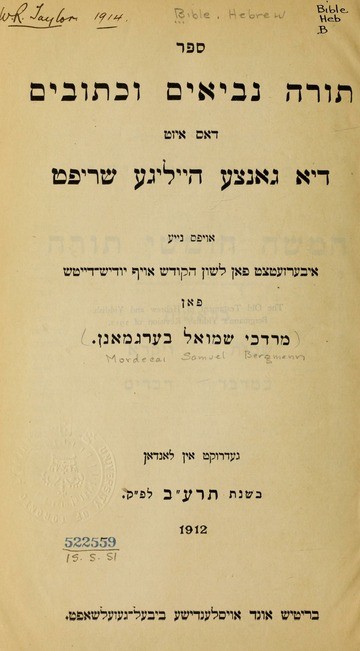
Translator, scholar, and son of the world his Yiddish Tanakh would one day serve.
The mature form of Bergmann's work. The 1912 edition remains one of the finest examples of Yiddish biblical translation ever produced.