The Mama Loshn
For centuries, Yiddish has been the intimate language of Ashkenazi Jewish life — the mama loshn, the mother tongue. It is the language of lullabies and laments, of Talmudic debate and kitchen-table wisdom, of Hasidic storytelling and everyday prayer.
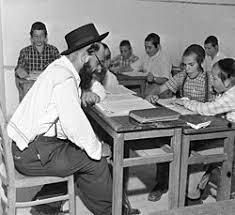
For millions of Haredi Jews today, Yiddish remains the living vernacular of home, school, and community. It is not merely a language of communication — it is a language of identity, of belonging, of faith transmitted from generation to generation.
"Yiddish is both a bridge and a boundary."
A Paradox at the Heart of the Book
Yet this same linguistic richness has also created a profound paradox. The people most immersed in Scripture — the People of the Book — have historically lacked ready access to the complete Bible in their own heart language. How could it be that Jewish people of all people actually do not have such, that is, a complete Bible available to them in Yiddish?
The architecture of Yiddish itself is part of the reason: its Hebrew-Aramaic script, its unwritten conventions of pronunciation, its centuries of oral transmission rather than standardized print culture. A text written in Yiddish requires a reader steeped in both the language and its script — a fluency that exists abundantly within the community, but that has made Yiddish Scripture feel distant to outsiders and, in some ways, inaccessible even to those within.
Henry (Chaim) Einspruch's Yiddish New Testament translation, for all its literary brilliance, was built for a 20th-century secular Yiddish literary world that no longer exists as the world's primary Yiddish-speaking community. Today's living speakers are Ultra-Orthodox Jews, and they bring to every text a set of deeply embedded religious-linguistic sensitivities about the Deity and other religious nomenclature. The work of Aaron Krelenbaum, the base text for the Yiddish Brit Chadasha of our complete Yiddish Bible, greatly softens the kind of halakhic friction found in Einspruch's work. Our revised Krelenbaum, by importing the standard Hasidic divine reference circumlocutions (Oybershter, Hashem, Riboyno shel Oylem, Bashefer), attempts to speak in the actual living vernacular of today's primary Yiddish community and even sidesteps — to a great extent — the Third Commandment concern by staying within the traditional conventions Ultra-Orthodox Jews have developed precisely to navigate the sanctity of reference to the Deity.
Printed Yiddish demonstrating the Hebrew-Aramaic square script in which all Yiddish texts are written.
Where This Exhibition Begins
This exhibition tells the story of how that Jewish cultural-religious boundary was crossed — first in print, and now in digital form. It is the story of Mordechai Samuel Bergmann and Aaron Krelenbaum, just two scholars, but one tool, and one living community beginning now to receive these two scholars' work. It is the story of the mama loshn presenting the whole counsel of Scripture — and finding, in that presentation, something that feels not foreign, but familiar.
"But Who Is Poorer Than the Person Without a Bible?"
Romans 10:14–15 This is the Crisis of Bible Poverty.But don't Jewish people have a Bible? Have you looked at their Bibles? Have you compared their Bibles word for word with the faithful translations we know and love? And are these Bibles also accessible? When you go into a Jewish Bookstore, are there plenty of faithfully translated Bibles?
INTRODUCTION
We have all heard it. Someone looks you in the eye at the fund-raising conference, or writes it in a letter to the congregation, and says something like this: "I know we have to support Bible translation. I believe in that. But when I see the starving child, the mother with no clean water, the father with no roof over his family — I cannot, in good conscience, keep sending money to print Bibles when those people are so desperately poor. My giving is going to the poor." It sounds noble. It sounds compassionate. It sounds, frankly, like something Moshiach Ben Dovid might say. But I want to ask you one question, and I want you to sit with it before you answer it: Who is poorer than the person without a Bible? Not the person without bread. Bread perishes. Not the person without shelter. Shelters crumble. Not even the person without medicine. Bodies die. But the person who lives and dies, and dies into eternity — never having heard the Word of God in a language they could understand? That is poverty without bottom. That is poverty without end. That is the poverty that outlasts the grave. And the Apostle Paul knew it. He wrote about it. He chained it together, link by iron link, in a passage we must hear today.PART ONE: THE FIGURE — Anadiplosis Gradatio
Before we read the text, I want to teach you a Latin phrase. Say it after me: Anadiplosis Gradatio. (ah-nah-dih-PLO-sis • grah-DAH-tee-oh) Say it again: Anadiplosis Gradatio. These are two Latin terms from classical rhetoric, the art of powerful speech. Anadiplosis (ah-nah-dih-PLO-sis) comes from the Greek ana "back" and diploun "to double." It means: the last word of one clause becomes the first word of the next. You double back. You pick up the thread. You carry the word forward. Gradatio (grah-DAH-tee-oh) means a staircase,a ladder, a rising chain. When you link anadiplosis after anadiplosis, clause after clause, each one climbing on the back of the last, you have built anadiplosis gradatio — a rhetorical chain that will not let you escape, pulling you from where you are to where the speaker intends for you to arrive. The Romans knew this device. The Greeks knew it. The Hebrew poets used its cousin in the Psalms. And the Holy Spirit, breathing through the Apostle Paul, deployed it with devastating precision in Romans chapter ten.PART TWO: THE TEXT — Romans 10:14–15
Hear the Word of God: "How then shall they call on him in whom they have not believed? And how shall they believe in him of whom they have not heard? And how shall they hear without a preacher? And how shall they preach, except they be sent?" — Romans 10:14–15a (KJV) Now watch the chain. Watch the anadiplosis gradatio. I will slow it down for you so you can see Paul building his ladder, rung by rung: "shall they call on him in whom they have not believed? How shall they believe in him of whom they have not heard? How shall they hear without a preacher? How shall they preach, except they be sent?" Do you see it?Call → Believed
Believe → Heard
Hear → Preacher
Preach → Sent
Paul takes the last word of each clause and hammers it into the first word of the next. He builds a chain — anadiplosis gradatio — and the chain runs backward from the moment of salvation all the way to the sending of the preacher. He is arguing that there is an unbreakable logical sequence to how God saves people. And if any link of that chain is broken — the whole chain fails. You cannot call without believing. You cannot believe without hearing. You cannot hear without a preacher. You cannot have a preacher without sending. Paul is saying: Take away any one of these, and nobody gets saved.PART THREE: THE APPLICATION — Where Does the Bible Fit?
Now — where does the Bible fit in Paul's chain? I want you to notice something. Paul says, "Faith cometh by hearing, and hearing by the Word of God" (Romans 10:17) — just two verses later. He closes the argument by telling us what the hearing is made of. It is made of the Word. The rhema — the spoken, declared, proclaimed Word of God. So let us extend the chain — Paul's own extension of it, and apply it to Bible translation: How shall they call on him in whom they have not believed? How shall they believe without hearing? How shall they hear without a preacher? How shall they preach without a Word? How shall they have the Word without a translation? How shall they have a translation without a translator? How shall there be a translator without sending? How shall there be sending without giving?Anadiplosis gradatio.
The chain holds. Or it breaks. And if it breaks at the link of translation, if a people group lives and dies with no Scripture in their mother tongue — then the whole chain above it never forms. They cannot hear. They cannot believe. They cannot call. This is not a peripheral outreach strategy. This is the spine of Romans 10.PART FOUR: THE POVERTY What Is "Bible Poverty"?
There are approximately 7,000 languages spoken on earth today. Wycliffe Bible Translators and their partners tell us that more than 1,500 language communities still have no Scripture at all — not a verse, not a chapter, not a word — in the language their mothers sang to them, the language their dreams come in, the language in which they will cry out when they die. Linguists call this Bible poverty. And I want to ask you again: Who is poorer than the person without a Bible? The man without bread is poor. But he can be fed today and hungry again tomorrow. The woman without clean water is poor. But an organization can drill a well. The child without medicine is poor. But a clinic can open. These are temporal poverties, profound, urgent, requiring our compassion and our action. I am not dismissing them. Moshiach Ben Dovid wept over human suffering. We must too. But the person who dies in Bible poverty, who lived their whole life within earshot of eternity, who laughed and loved and wept and wondered, who perhaps cried out to something in the darkness and never knew the name — and who then stepped into the presence of God having never once heard "God so loved the world" in a language that split their heart open? That person did not just lack bread. That person lacked the Bread of Life. That person did not just lack water. That person lacked the Living Water. That person did not just lack medicine. That person lacked the Great Physician. And unlike physical hunger, which ends at death, this poverty does not end at death. It extends beyond it.PART FIVE: THE REBUKE (Gentle, But Necessary)
I want to speak gently here, but I must speak clearly. When we say, "I would rather give to physical poverty than to Bible translation," we have, perhaps without knowing it,cut Paul's chain. We have decided that the lower links matter but the upper links do not. We have decided that the body is more worth saving than the soul. We have decided that what perishes is more urgent than what is eternal. And I do not believe you believe that. I do not think, if you sat down with a theology of eternity, you would actually hold that position. I think it is an emotional response to an immediate image — the starving child — and I honor the emotion. God gave you that emotion. Use it. But do not let emotion overrule revelation. Paul's chain does not have a link that says: "And how shall they eat unless you feed them first?" not because food doesn't matter, but because Paul is making a point about eternal stakes, and he will not let us shorten our vision to the temporal. The great translator William Carey, who went to India and translated the Bible into dozens of languages, also started schools, fought widow-burning, and worked against child sacrifice. He did not choose between body and soul. He served whole persons made in the image of God. Wycliffe, Tyndale, Luther, Carey, Judson, Nida, these men and women did not consider Bible translation a luxury to be funded after the necessities were covered. They considered it the greatest act of mercy a human being could extend to another human being. Tyndale died by strangulation and fire so that the English ploughboy could read Scripture. Was that a waste? Was that taking from the poor? His last words were: "Lord, open the King of England's eyes." He understood: the blindest poverty is the poverty that cannot see God.CONCLUSION: The Chain Must Hold
I close where Paul closes, with sending. Anadiplosis gradatio. The chain runs from you, your wallet, your prayer, your passion, all the way to the moment when, in some village where a language has never had a Bible, a grandmother hears for the first time in her own words, her own sounds, her own heart-language: "For God so loved the world..." And she hears. And she believes. And she calls. And she is saved. Every link matters. The sending matters. The translator matters. The Word matters. The preacher matters. The hearing matters. The believing matters. The calling matters. Do not break the chain at the link of translation. Do not tell God you love the poor too much to give them the Bible. Because the Bible is not a luxury item you bring after the poverty is fixed. The Bible is the fix for the deepest poverty there is. So who is poorer than the person without a Bible? No one. No one on earth. And no one in eternity."How beautiful are the feet of them that preach the gospel of peace, and bring glad tidings of good things!"
— Romans 10:15b