Linguist, scholar, and the man who gave the Brit Chadasha its authentic Yiddish voice.
The Brit Chadasha as a Jewish Text
A generation after Bergmann gave the Tanakh its Yiddish voice, Aaron Krelenbaum took up the work of the older scholar, the Brit Chadasha. Krelenbaum was a brilliant linguist and scholar-in-residence at the London's Mildmay ministry — and he understood something essential about the text he was translating.
The Brit Chadasha is, at its core, a Jewish text. Its idioms, its debates, its festivals, and its teachings breathe the air of Second Temple Judaism. It was written almost entirely by Jewish authors, addressed largely to Jewish audiences, and rooted in the Hebrew Scriptures at every turn. To translate it into Yiddish was not to bring a foreign document into a Jewish language — it was to bring a Jewish document home.
"It did not sound like a foreign text translated into a Jewish language. It sounded like a Jewish text returning home."
Linguist, scholar, and the man who gave the Brit Chadasha its authentic Yiddish voice.
Krelenbaum's translation of the Brit Chadasha was acclaimed across communities for its authenticity. Scholars and readers agreed: it sounded like a Jewish text returning to a Jewish language.
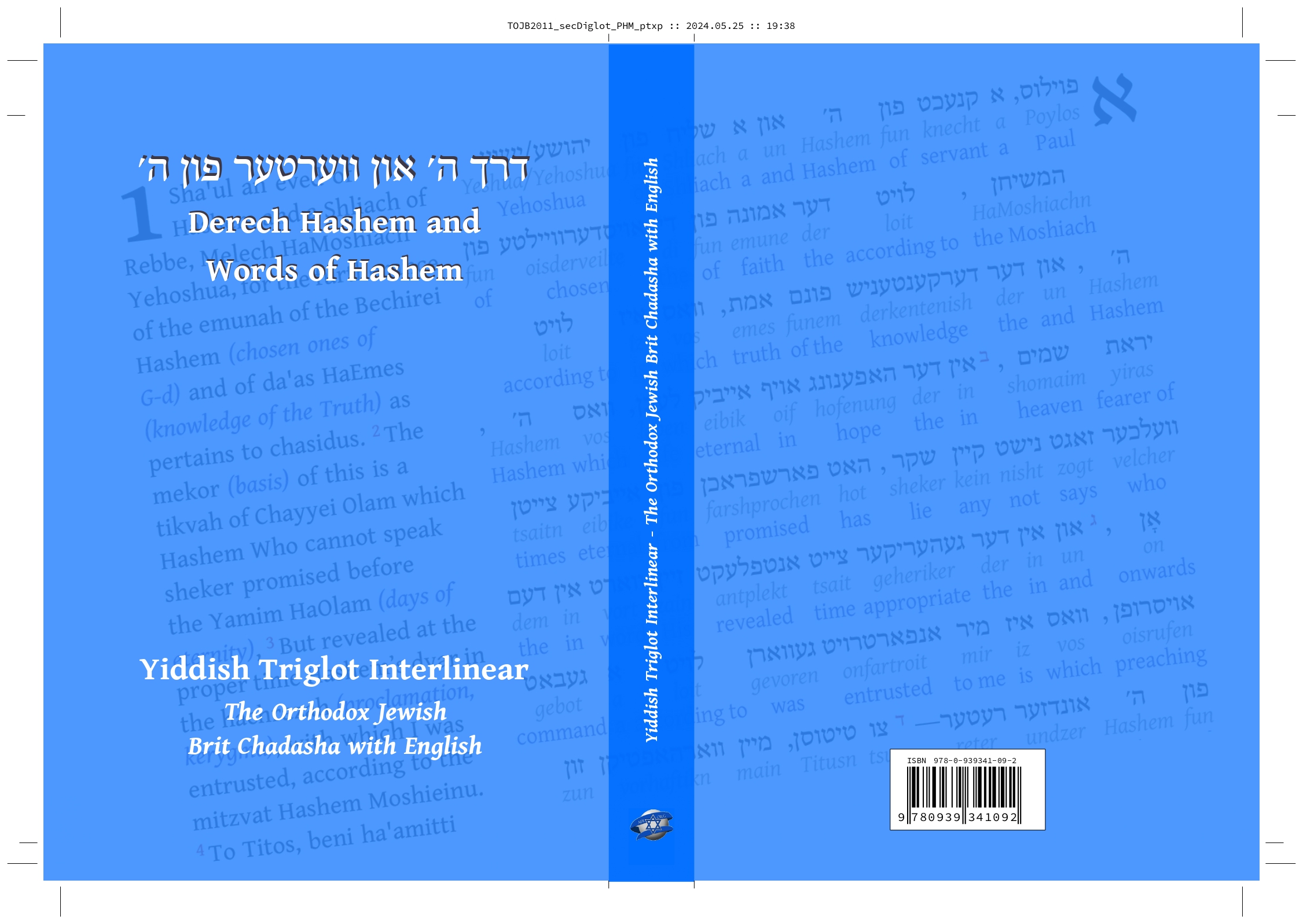
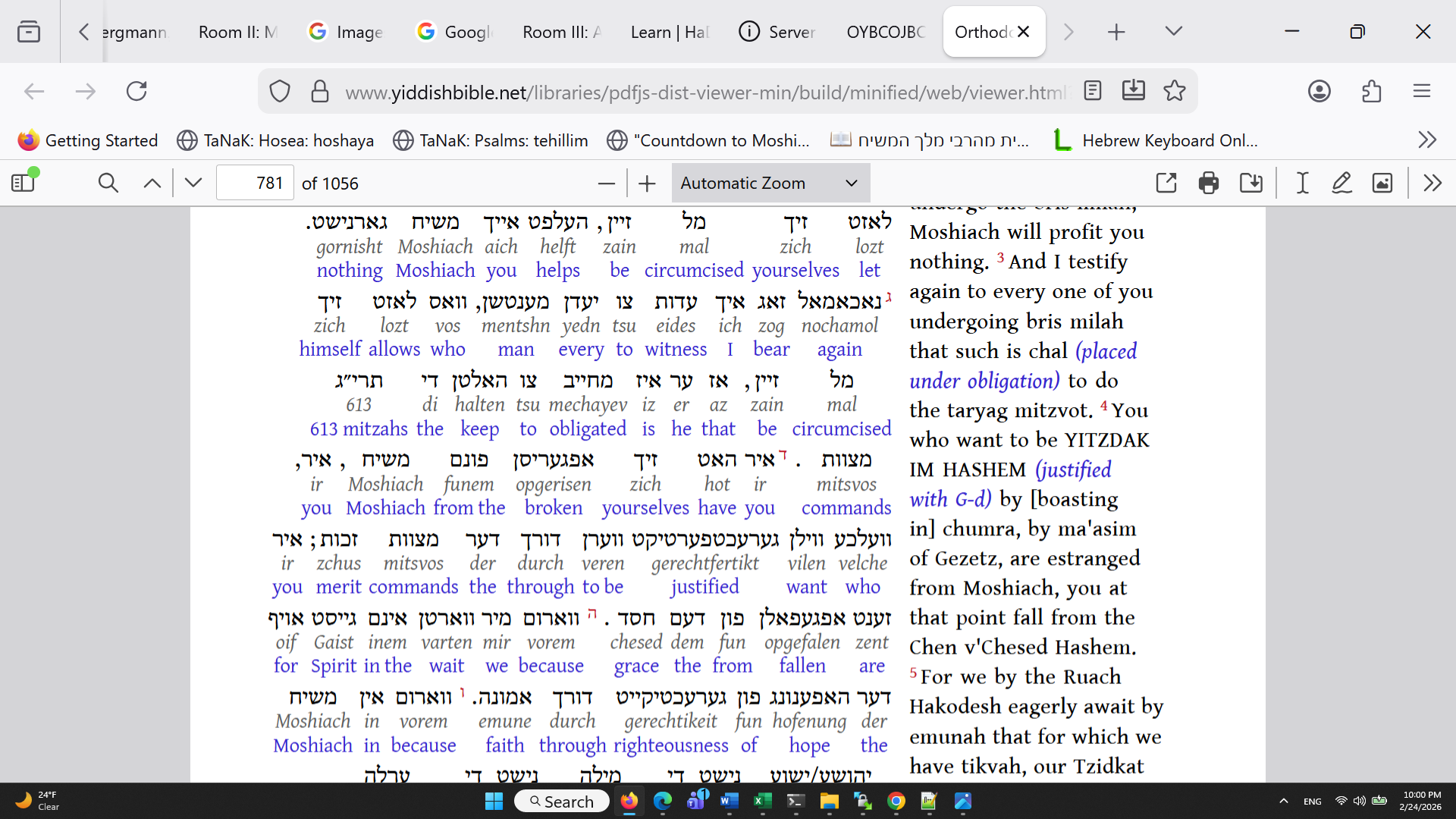
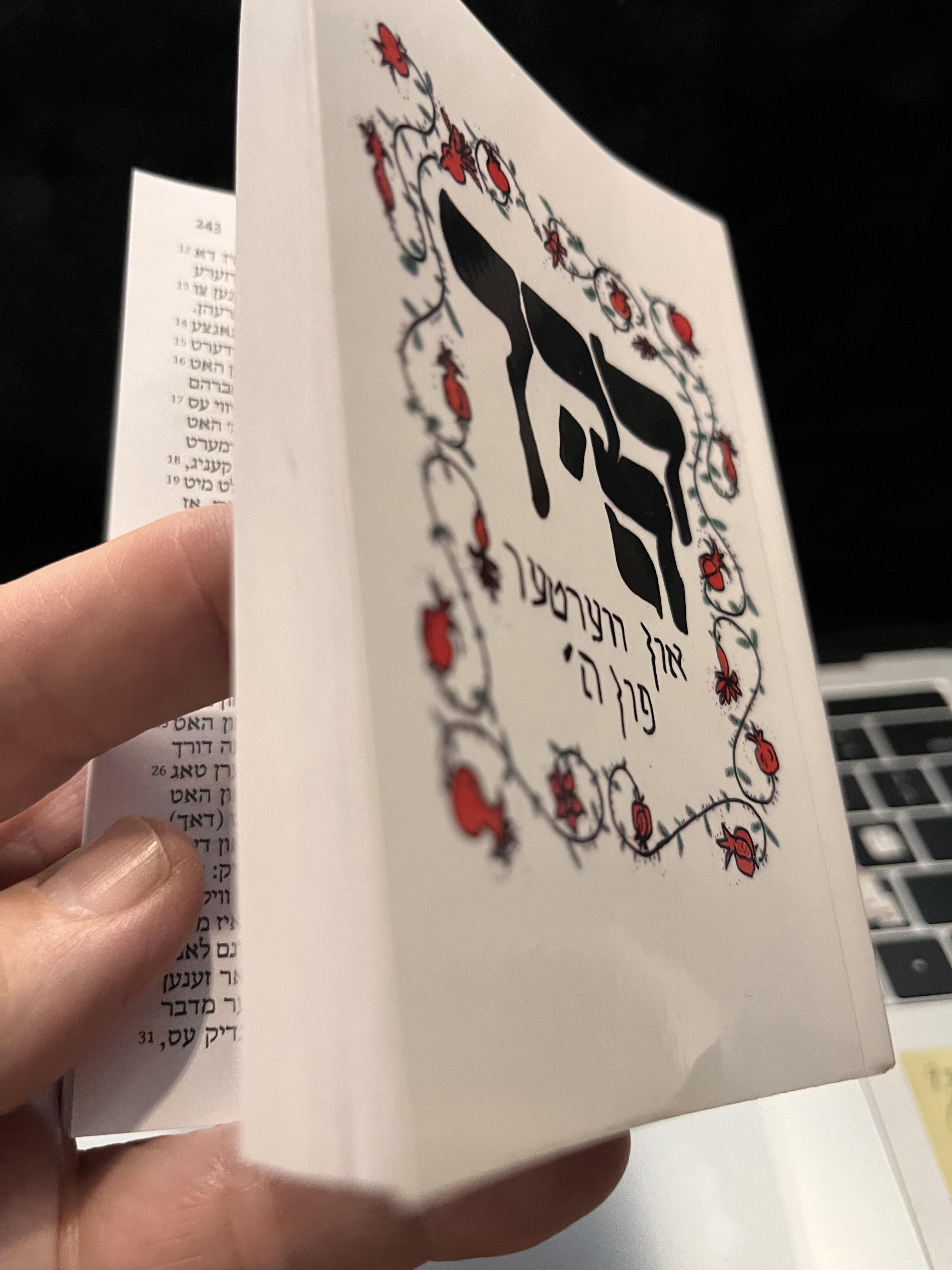
At its core a Jewish text, here unpacked with the ORTHODOX JEWISH BRIT CHADASHA as its anchor on each page.
The Yiddish Triglot shows Aaron Krelenbaum's work updated and unpacked and available universally on mobile devices as its digital delivery system.
The London Mildmay ministry and the Making of the Text
The London Mildmay ministry was one of the principal centers of Jewish outreach in the English-speaking world during the early twentieth century. It brought together scholars of remarkable linguistic range, and Krelenbaum flourished in that environment. His work on the Brit Chadasha drew on a deep knowledge of both classical Yiddish literature and the Greek and Aramaic sources underlying the Brit Chadasha text.
The result was a translation that could stand alongside Bergmann's Tanakh as an equal: fluent, faithful, and fully at home in the language of Ashkenazi Jewish life. Krelenbaum had understood that authenticity in translation is not merely a matter of vocabulary and grammar — it is a matter of voice, rhythm, and cultural resonance.
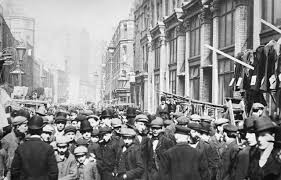
The early 20th century Jewish London East End where Aaron Krelenbaum's Yiddish text was born.
Krelenbaum's (also spelled Krolenbaum's) translation of the Brit Chadasha was more acclaimed at the time of its publication than Einspruch's. P.P. Levertoff was born Feivel Levertov (1878–1954), a highly respected graduate of Volozhin Yeshiva. Volozhin was the most prestigious Lithuanian yeshiva. Levertoff was a noted scholar, and a prominent figure of the day. For this Yiddish translation he gave his haskama-style endorsement, which would have carried real weight coming from such a linguistically and Jewishly credentialed authority. Levertoff wrote:"I think this Yiddish Translation can compare favorably with any standard translation of the Brit Chadasha." In classical Hebrew he wrote: "The copy of my Brit Chadasha of Mr. Krolenbaum (Krelenbaum) was done with complete diligence. I read the entire book with careful attention and I am pleased to say to him: Yasher Koach!"
The institution where Krelenbaum toiled over his Yiddish translation during the 1940s.